
Prewar Apartment Building Roof Guide for Bronx Owners
Summary
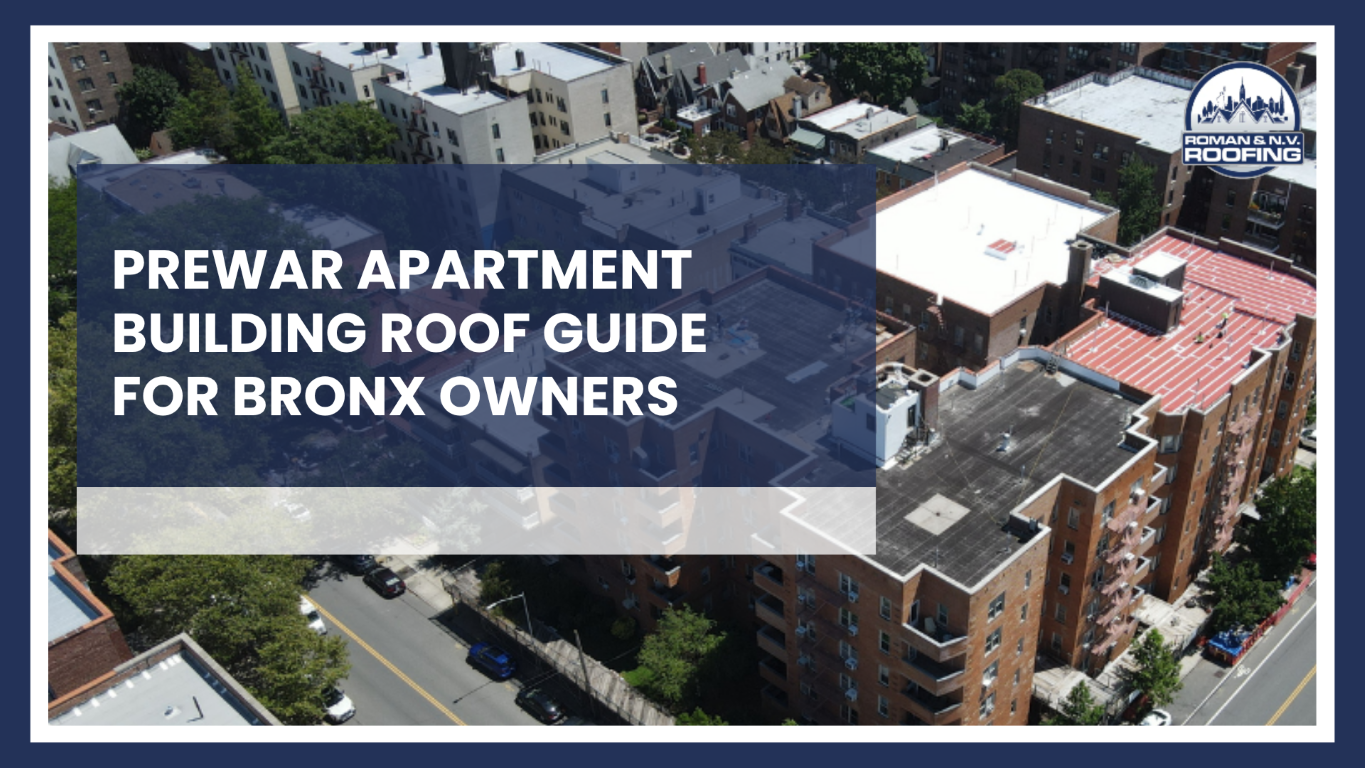
Prewar apartment buildings in the Bronx usually have large flat roofs with stair and elevator bulkheads, water tanks on steel frames, stairwell skylights, and many layers of old repairs. Most leaks start where those features meet the roof, or where clogged drains let water pond. Pigeon nests and droppings often block drains and wear down surfaces. Tenant leak complaints can lead to HPD violations, usually Class B with a 30-day correction window. The Grand Concourse Historic District includes 78 buildings, where visible roof work may need landmark approval.
A prewar apartment building roof in the Bronx is usually a large flat roof crowded with bulkheads, a water tank, stairwell skylights, and decades of old repairs. Most leaks start at those features rather than in the open middle of the roof. Owners who know where to look can stop small problems before they turn into tenant complaints and city violations.
This guide covers the roof issues Bronx building owners and managers ask us about most. You will learn how to trace an apartment building roof leak, fix bulkhead and skylight leaks, protect the roof under a water tank, deal with pigeons, and respond to an HPD violation. Our family-owned company has worked on New York City roofs since 1987, and this advice comes from real Bronx rooftops.
What Makes a Prewar Apartment Building Roof Different
Prewar buildings went up before modern roofing systems, insulation, and drainage design became standard. Many have been patched, coated, and re-roofed several times since then. Each layer and repair adds new joints where water can find its way inside.
Most of these roofs share the same set of features. Here is what you will usually find up there:
Stair and elevator bulkheads: small brick structures that house the stairs and elevator machinery
Rooftop water tank: a large tank on a steel frame called dunnage
Stairwell skylights: glass openings that bring daylight to the top of the stairs
Parapet walls: low walls around the edges, often topped with stone or terra cotta
Roof drains and leaders: the pipes that carry water down through or along the building
Old roof layers: tar, gravel, and roll roofing stacked over many decades
Every one of these features needs flashing, and every flashing joint ages. That is why roof care on a prewar building focuses on details, not just the open surface.
Why Bronx Buildings Face Extra Roof Stress
The Bronx is full of prewar apartment buildings. By the mid-1930s, almost three hundred apartment buildings stood along the Grand Concourse alone, most of them five or six stories high. Many of those roofs are now on their fourth or fifth roofing system.
Weather adds steady wear. Winter freeze and thaw cycles open cracks in flashing and masonry. Summer heat softens tar and dries out older membranes, while heavy rain tests every drain on the roof.
Buildings also carry plenty of rooftop traffic. Tank crews, elevator mechanics, cable installers, and HVAC techs all walk the roof. Each visit can scuff a membrane, dent flashing, or leave behind debris that blocks a drain.
Drainage on Large Prewar Roofs
Drainage decides how long a big flat roof lasts. Most prewar apartment roofs drain to interior drains that run down through the building, while others use scuppers that empty into leaders on the outside walls. Either way, every drain has to stay clear for the roof to work.
Strainers over the drains catch leaves, nests, and debris. When a strainer goes missing, that debris can slide into the pipe and create a clog deep inside the building. Water then backs up onto the roof, or worse, leaks from the pipe inside a wall.
Watch for water that sits on the roof more than a day or two after rain. Ponding adds weight to an old roof deck and speeds up wear on the membrane. Cleaning drains each season and replacing missing strainers prevents many of the leaks we get called for.
Apartment Building Roof Leak: Finding the Real Source
On an apartment building, the first sign of trouble usually shows up in a top-floor apartment or at the top of a stairwell. However, the stain on the ceiling rarely sits directly below the opening. Water can travel along the deck, through old roof layers, or down a wall before it appears inside.
Common sources include worn flashing at bulkheads and parapets, clogged drains, cracked seams, and open joints around pipes and vents. Old repairs are another frequent cause. A patch that worked years ago can shrink, crack, or pull loose with age.
Finding the true source takes patience. A good roofer starts at the stain and works outward, checking every joint and penetration in that area. Sometimes a controlled water test, done one section at a time, is the only way to confirm the cause.
Speed matters with tenants below. A quick temporary repair protects apartments while you plan the permanent fix. Clear updates to affected tenants also reduce complaints and help keep the building in good standing. Ask tenants to report new stains right away, with photos if possible, so you can track where the water is moving.
Bulkhead Roof Leak: Stair and Elevator Bulkheads
A bulkhead roof leak is one of the most common problems in prewar buildings. Bulkheads have walls, a small roof, a door, and sometimes windows, so they create a lot of joints in a small space. Water can enter at any of them.
The most frequent trouble spot is the base flashing where the main roof turns up the bulkhead wall. Over time, that flashing cracks, pulls away, or sinks below the newer roof layers. The brick walls of the bulkhead can also absorb water through worn mortar joints.
Elevator bulkheads deserve extra attention, because leaks there can reach the elevator machinery. Door thresholds, the bulkhead’s own small roof, and vent openings all need regular checks. Repairs often include new base flashing, repointing the brick, and resealing the door and its threshold. Many bulkhead doors also rust at the bottom edge, so replacing a worn door can stop a leak that patching never fixed.
Stairwell Skylight Leak: Light Without the Water
Many prewar buildings have a skylight over the main stairwell. Older units often use wired glass in a metal frame set on a raised curb. When the curb flashing fails or the glazing seals dry out, water drips straight down the stairs.
Not every drip is a leak. Warm, moist air rising up a stairwell can condense on cold glass in winter and drip back down. A roofer can usually tell the difference by checking the curb, the frame, and the timing of the drips.
A stairwell skylight leak often calls for new curb flashing and resealed glazing. If the frame is rusted or the glass is cracked, replacing the whole unit may make more sense. Some buildings also add protective screens or guards above stairwell skylights for safety.
Rooftop Water Tank Roof Damage
Rooftop water tank roof damage is easy to miss, because the tank itself draws all the attention. Most tanks sit on steel dunnage, a frame of beams that passes down through the roof to the building structure. Every point where that steel meets the roof needs its own flashing.
Over time, the steel can rust, and the flashing around it can crack or separate. Drips and overflow from the tank also keep the roof below wet for long stretches. That constant moisture speeds up wear on the membrane and can hide damage underneath.
Crews often seal steel posts with pitch pans or custom flashing, then check them during every roof inspection. When the roof needs replacement, plan the work with your tank company. Coordinating both trades avoids leaving gaps around the dunnage and keeps water service running.
Pigeon Damage Roof Problems
Pigeons are a fact of life on Bronx rooftops, and they cause more roof trouble than most owners expect. Nests, feathers, and debris clog drains and gutters. Once water backs up, it sits on the roof and finds every weak seam.
Droppings add another problem. They build up on the roof surface, around skylights, and at bulkhead corners, and they can wear down some roofing materials over time. Pigeon debris can also carry disease, so cleanup crews should wear protective gear.
Regular cleaning keeps pigeon damage roof problems under control. Clearing drains, removing nests from ledges, and closing gaps around bulkheads all help. Humane deterrents such as netting or ledge guards can also discourage roosting near vulnerable spots.
HPD Roof Leak Violation: What Owners Need to Know
When tenants report a leak, an HPD inspector may visit and issue a violation. HPD sorts violations into classes, and the class sets the deadline. Class A non-hazardous violations allow 90 days, Class B hazardous violations allow 30 days, and most Class C immediately hazardous violations allow 24 hours.
A water leak in a ceiling is commonly listed as a Class B hazardous condition. Leaks that lead to mold can bring a separate Class C violation, and HPD gives owners 21 days to correct mold. Either way, the clock starts when the notice arrives.
Fixing the roof is only part of the job. Owners must also certify the correction with HPD. If HPD does not reinspect a certified violation, it closes after 70 days. Keep photos, invoices, and roofer reports, because they support your certification if anyone questions it.
The best defense against an HPD roof leak violation is fixing the cause instead of the stain. A patch that fails again brings a new complaint and a new violation. This section is general information, so talk with a housing attorney or your managing agent about your specific situation.
Grand Concourse Apartment Building Roof Care
The Grand Concourse is famous for its Art Deco apartment buildings. In 2011, the Landmarks Preservation Commission created the Grand Concourse Historic District, which includes 78 buildings along or near the Concourse between 153rd and 167th Streets. Most buildings in the district went up between 1916 and 1941.
A Grand Concourse apartment building roof often sits behind decorative parapets with patterned brick, stone, or terra cotta trim. Water that gets into those parapets can damage the ornament and the roof edge at the same time. Flashing and coping work here needs extra care to protect the original details.
Owners inside the historic district should expect closer review of visible exterior work. Roof work that changes what people see from the street may need Landmarks Preservation Commission approval. Check with your contractor and the commission before planning changes to parapets, bulkheads, or rooftop structures.
Repair or Replace a Prewar Apartment Building Roof?
Targeted repairs make sense when problems stay limited to a few joints and the insulation below is dry. Rebuilding flashing at one bulkhead or resealing a skylight curb can buy many years of service. Our post on signs your roof needs repair in the Bronx covers the early warning signs in more detail.
Bigger problems point toward replacement. Watch for these warning signs:
Leaks in several apartments or stairwells at once
Soft or spongy spots on the roof surface
Seams, blisters, and cracks across large areas
Two or more old roof layers already in place
Repeat HPD complaints for the same leak
Prewar roofs often carry so many old layers that a full tear-off is the only lasting option. A tear-off also lets crews inspect and repair the deck, add insulation, and improve drainage. Plan the work in phases where possible, so tenants stay dry and informed throughout.
Where Roof Coatings Fit
Some prewar roofs are too worn for spot repairs but still too sound to replace. In those cases, a reflective coating over a clean, dry roof can add years of service. Older tar roofs in the Bronx often carry silver aluminum coatings for this reason.
Coatings only work when the roof underneath is dry and firmly attached. If a test cut shows wet insulation, a coating simply traps the problem. Our guide to the best roofing materials for Bronx buildings covers these options in more depth.
What to Expect From a Prewar Roof Inspection
A thorough roof inspection on a prewar building takes more than a quick walk. The inspector should check every bulkhead, skylight, drain, and tank support, plus the parapets and the open roof surface. Photos of each area make the findings easy to understand.
On older roofs, a small test cut can show how many layers are already there and whether the insulation is wet. That one detail often decides whether repairs or a replacement make more sense. It also helps you compare proposals from different contractors on equal terms.
A good report ranks problems by urgency. Active leaks and safety issues come first, followed by items that can wait for planned work. Keep each report on file, because it builds a history of the roof that helps with HPD certifications, insurance, and future sales.
Working With Tenants During Roof Work
Roof work on an occupied building affects everyone inside. Clear notice before the job starts goes a long way toward keeping tenants patient. Tell them the dates, the working hours, and whether any areas will be off limits.
Crews often carry materials through hallways and stairwells, especially in walk-up buildings. Protecting floors, walls, and the stair bulkhead door keeps common areas clean. Ask your contractor how they will handle debris, so it never piles up in halls or on the sidewalk.
Weather planning matters on occupied buildings too. Crews should avoid opening large areas when heavy rain is coming, and they should cover any open sections at the end of each day. Ask about this plan before signing a contract.
A Maintenance Plan for Bronx Apartment Buildings
Regular maintenance costs far less than emergency repairs and violations. A simple plan keeps small problems from growing. Here is a practical schedule:
Spring: clear drains, check flashing at bulkheads, skylights, and the tank
Summer: look for blisters, cracks, and soft spots after heat waves
Fall: remove leaves, nests, and debris from drains and leaders
Winter: watch top-floor ceilings and stairwells after snow melts
After storms: inspect the roof or have it checked by a professional
Every visit: photograph conditions and keep a written log
A written log helps you spot patterns over time. It also gives you records to share with HPD, insurers, or future buyers.
How N.V. Commercial Roofing - NYC Works With Bronx Owners
Our family-owned company has served New York City since 1987, and our licensed and insured crews work on apartment buildings across the Bronx. Property owners have given us a 5.0 rating on Google across 160 reviews.
Every project starts with a full roof inspection, including bulkheads, skylights, the tank, and every drain. We explain what we find in plain language and give an honest recommendation. If a repair will solve the problem, we say so, and if replacement is the better choice, we explain why.
“On a prewar roof, the leak almost always starts at something sticking up through it,” says Billy Duka, a second-generation roofer on our team. “Bulkheads, tank steel, and skylights are where we look first.”
We also understand the pressure of tenant complaints and HPD deadlines. Our team works to stop active leaks quickly, then plans permanent repairs that keep the building off the violation list.
Protecting Your Prewar Apartment Building Roof
A prewar apartment building roof works best when someone watches the details. Bulkheads, skylights, water tank supports, and drains all need regular checks. Catching problems early keeps tenants dry, protects your building, and helps you avoid HPD violations.
If your building has a leak, a violation, or a roof that is showing its age, call N.V. Commercial Roofing - NYC at (646) 717-3737 to schedule a roof inspection.
FAQ Section
Q: Why is my apartment building roof leaking at the top floor?
A: Most top-floor leaks start at bulkhead flashing, clogged drains, skylight curbs, or old repairs that have cracked with age.
Q: How long does a landlord have to fix a roof leak in NYC?
A: A ceiling leak is commonly a Class B HPD violation, which gives owners 30 days to correct the condition.
Q: What causes a bulkhead roof leak?
A: Cracked base flashing, worn mortar in the bulkhead walls, and failed door thresholds are the most common causes.
Q: Can a rooftop water tank damage the roof?
A: Yes. Rusting steel supports, failed flashing, and constant drips from the tank can wear down the roof underneath.
Q: Do Grand Concourse buildings need landmark approval for roof work?
A: Buildings in the historic district may need Landmarks Preservation Commission approval for roof work visible from the street.
About the Author
Billy Duka is a second-generation roofer at N.V. Commercial Roofing - NYC, a family-owned company working on New York City roofs since 1987. He has spent his career on rooftops across the Bronx and the rest of the city, and writes to help building owners and managers protect their properties and tenants.
Visit us: https://www.commercialroofingbronx.com/
